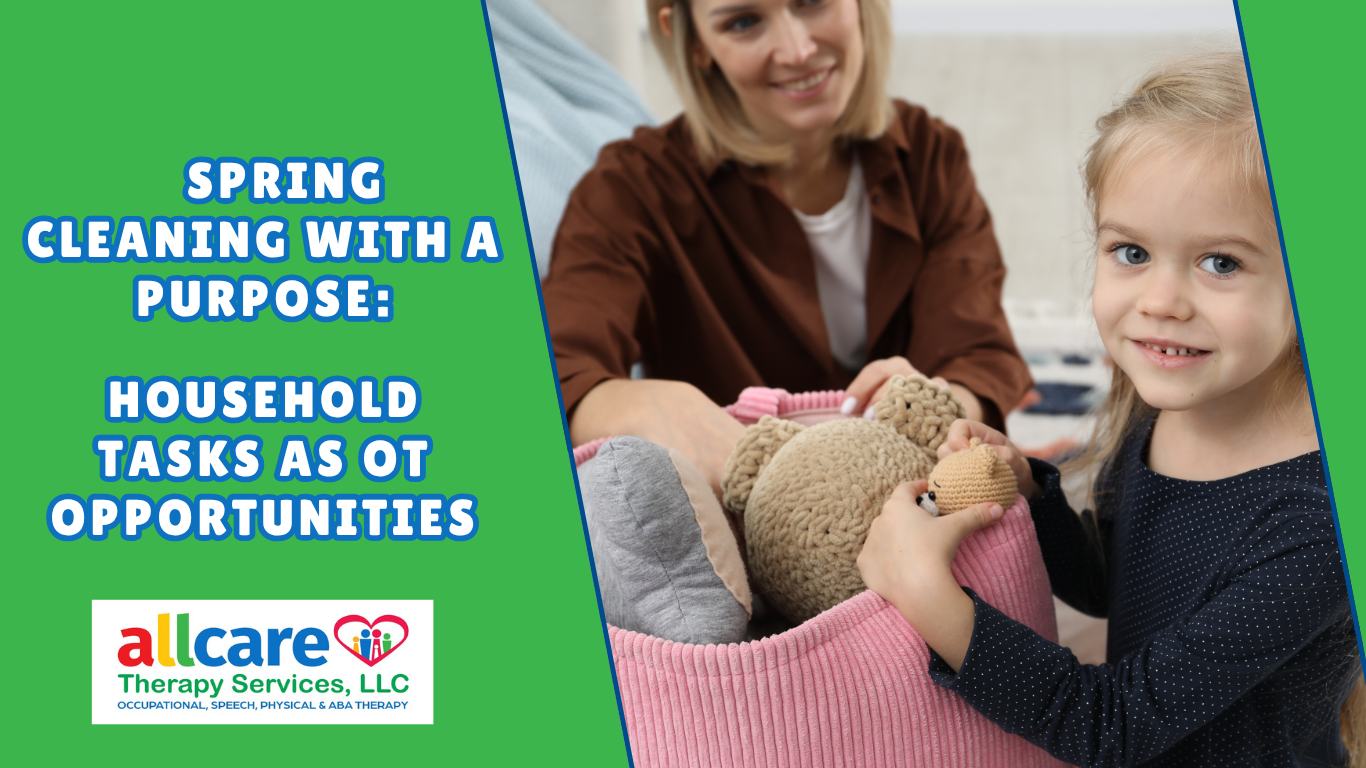
Spring Cleaning With a Purpose: Household Tasks as OT Opportunities
March 26, 2026
Why Chores Matter in OT
Daily household tasks naturally support many developmental areas we target in therapy, such as:
-
Fine motor skills (gripping tools, buttoning, sorting small items)
-
Gross motor skills & strength (carrying, pushing, climbing, reaching)
-
Sensory processing (deep pressure input, movement, tactile exploration)
-
Executive functioning (planning, sequencing, task initiation, organization)
-
Life skills & independence (confidence, contribution, responsibility)
Chores by Age: OT-Focused Spring Cleaning Tasks
Ages 2–4: Little Helpers
Simple, short tasks that build fine motor foundations and body awareness:
-
Sorting socks or mittens by color or size
-
Wiping surfaces with a spray bottle + cloth (bilateral skills!)
-
Putting toys in baskets by category
-
Carrying lightweight items to the trash or laundry
Ages 5–7: Building Independence
Kids start tackling multi-step chores using more refined skills:
-
Folding washcloths or towels (visual-motor + sequencing)
-
Watering plants with a small watering can
-
Dusting low shelves
-
Sorting winter gear to “keep” vs. “donate”
Ages 8–10: Responsibility & Organization
Tasks that challenge planning, strength, and sustained attention:
-
Organizing books, toys, or a closet using a system
-
Vacuuming small rooms
-
Washing windows or mirrors
-
Carrying laundry baskets
Ages 11+: Life Skills & Executive Functioning Growth
Older kids can handle higher-level routines that prepare them for real-world independence:
-
Planning and completing a room “reset”
-
Sorting paperwork, school supplies, or sports gear
-
Changing bedding independently
-
Outdoor tasks like raking, weeding, or sweeping porches
How to Make Chores OT-Friendly (and Fun!)
Try these therapist-approved tips to keep kids engaged:
-
Use visual checklists
Kids thrive with structure. Pictures or step-by-step lists help them succeed. -
Break tasks into small parts
(“First put books on the shelf, then toss trash, then make the bed.”) -
Incorporate sensory breaks
Heavy work like pushing a laundry basket or scrubbing can regulate and increase focus. -
Play music or set a timer
Builds motivation and teaches pacing. -
Let kids choose between 2–3 chores
Choice = ownership = better follow-through.
The OT Takeaway
Spring cleaning becomes so much more meaningful when families see it as a chance to practice skills—not perfection. When kids participate in household tasks, they’re building:
-
confidence
-
independence
-
motor skills
-
emotional regulation
-
a sense of contribution
Please Contact Allcare Therapy Services if you have any questions!