Screen Time and Language Development
February 10, 2026
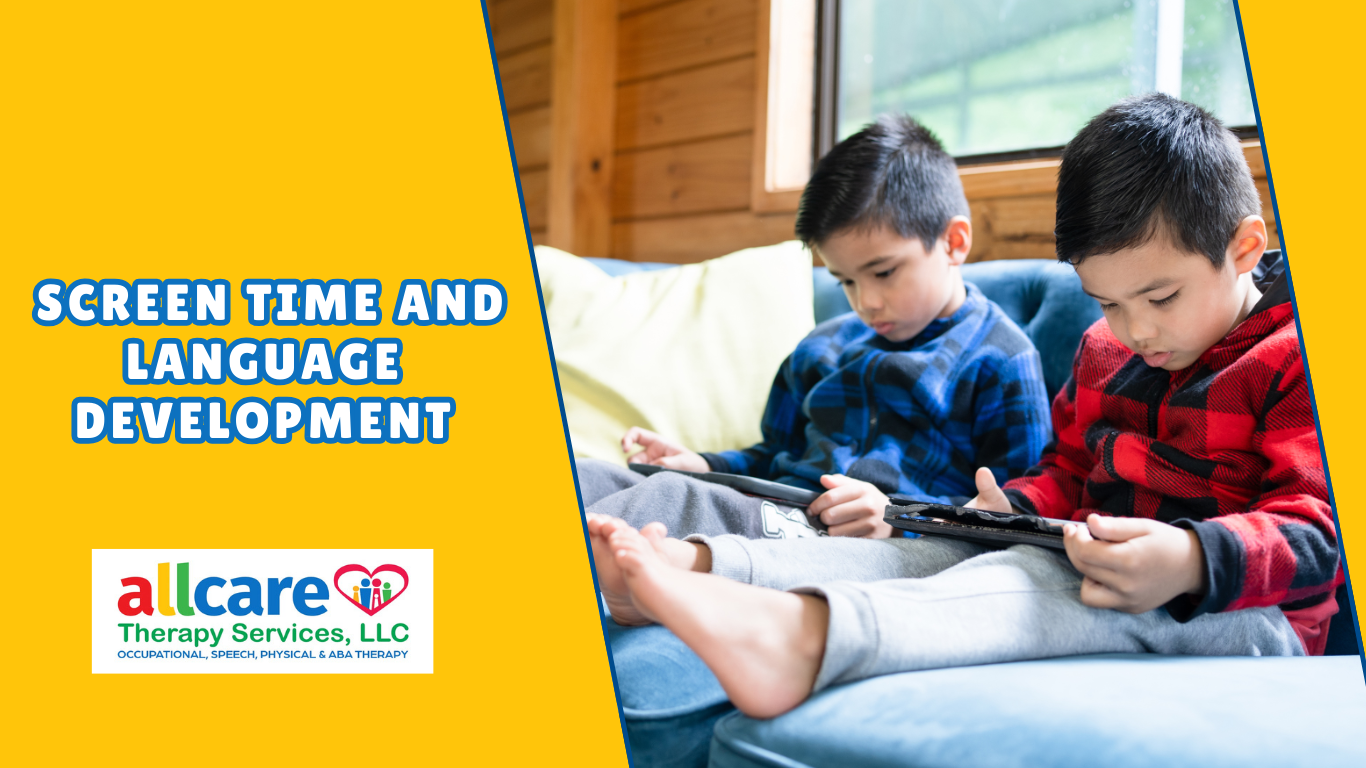
There are studies that have found that excessive screen time can have negative impacts on a child’s language development. When a child engages in too much screen time, it can reduce their exposure to social face-to-face interaction which could result in difficulties with pragmatics, or social language. It also leads to less opportunities to practice using their expressive and receptive language skills, potentially resulting in language delays.
Knowing how to make transitions between activities easier can also help establish a better routine with screen time and reduce the risk of language delays. Making sure that your child is aware of how long they will have with their screen or giving warnings when their time is almost up can help to make transitioning between activities smoother. Studies have also found that transitions tend to be easier when children watch higher reality, more realistic videos or shows rather than overstimulating animated videos.
Screen time in moderation can also encourage language development if used appropriately. Co-viewing with the child can allow for more language development opportunities by pausing and labeling objects, emotions, etc. Some alternative ways to encourage language development that do not involve screen time include narrating everyday routines, singing songs, labeling emotions, reading books, and movement.
There are ways to use screens as a tool that can help a child’s language development as long as it is used in an appropriate manner and there are healthy habits and routines around the child’s screen time.